


Using crutches while keeping weight off your leg Te whakamahi i ngā rākau hauā
Find out how to adjust your crutches and how to use them properly to support an injured leg. This page shows you how to use crutches when your healthcare provider has said you cannot put weight on your affected leg (non weight-bearing).
Set your crutches to the right height
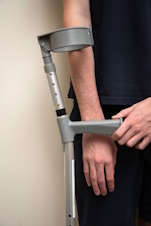
Adjust the height of each crutch so:
- with your arm straight by your side, the handle of the crutch is in line with the bone that sticks out above your wrist
- the cuff of the crutch is just below your elbow.
To adjust the handle of the crutch:
- push the pins in and slide the crutch to the correct height
- do the same to adjust the height of the cuff.
Using crutches to keep weight off your injured leg
Using your crutches correctly can allow you to keep the weight off your injured or affected leg. If your healthcare provider has asked you to keep the weight off your leg this is to help your bone and tissue heal properly and make sure your bone heals in the correct position.
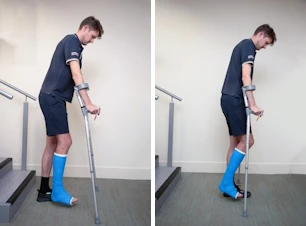
Walking
- Put both crutches in front of you, a short step length away keeping your affected leg off the ground.
- Lean on the crutches to take your weight on your arms and crutches while stepping forward with your good leg. Take care not to put any weight on your affected leg.
Walking
- Put both crutches in front of you, a short step length away keeping your affected leg off the ground.
- Lean on the crutches to take your weight on your arms and crutches while stepping forward with your good leg. Take care not to put any weight on your affected leg.
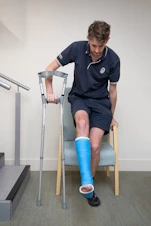
Sitting down
- Bring your crutches together in front of you while keeping your affected leg off the ground. Place them into an H shape as shown in the picture, holding the handles with one hand.
- Reach your arm back for the chair behind you and slowly lower yourself to sit down. Keep your affected leg off the ground.
Avoid moving between sitting and standing with your arms in the crutches.
Sitting down
- Bring your crutches together in front of you while keeping your affected leg off the ground. Place them into an H shape as shown in the picture, holding the handles with one hand.
- Reach your arm back for the chair behind you and slowly lower yourself to sit down. Keep your affected leg off the ground.
Avoid moving between sitting and standing with your arms in the crutches.
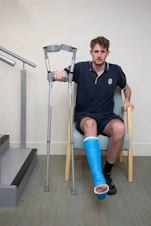
Standing up
- Put your weight on your good leg, with your affected leg off the ground.
- Place your crutches together to form an H shape as shown in the picture.
- Use one arm to push down on the crutch handles and the other on the surface you are sitting on or the chair armrest.
- Once you are standing and have your balance, place your arms through both crutches, ready to walk.
Avoid moving between sitting and standing with your arms in the crutches.
Standing up
- Put your weight on your good leg, with your affected leg off the ground.
- Place your crutches together to form an H shape as shown in the picture.
- Use one arm to push down on the crutch handles and the other on the surface you are sitting on or the chair armrest.
- Once you are standing and have your balance, place your arms through both crutches, ready to walk.
Avoid moving between sitting and standing with your arms in the crutches.
Going up steps
- Place your good leg on the step, taking care not to put any weight on your affected leg.
- Bring your crutches up onto the step.
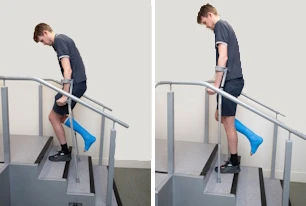
Going up steps
- Place your good leg on the step, taking care not to put any weight on your affected leg.
- Bring your crutches up onto the step.
Going down steps
- Place your crutches on the step below with your affected leg out in front of you.
- Slowly lower your good leg down onto the step below, taking care not to put any weight on your affected leg.
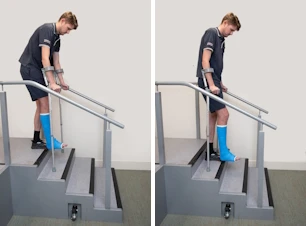
Going down steps
- Place your crutches on the step below with your affected leg out in front of you.
- Slowly lower your good leg down onto the step below, taking care not to put any weight on your affected leg.